How long does Speech Therapy take for children?
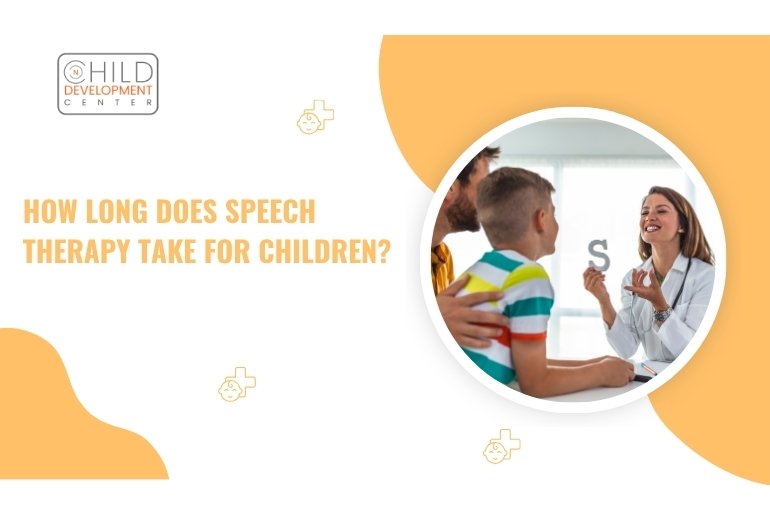
Will my child ever catch up?
It is one of the first questions that parents ask when they are informed their child might require speech therapy. Others are concerned because their toddler hasn’t started talking. Still others observe their child talking a lot, though without being able to make out what is being said. Whatever the situation, this uncertainty can be difficult to sit with.
Truth is, there’s no calendar that can tell us when a child will be done with speech therapy. All children communicate in different ways, and that is as it should be. Some children noticeably improve within a few months, while others require continued support as they acquire speech and language skills over time.
The real goal is not how long speech therapy takes, but whether your child is making progress. With the right steps, patience, and early intervention, many children can grow into confident communicators.
At the Child Development Centre (CDC), we understand that speech is only one part of a child’s overall development. If you’re wondering how long does speech therapy take, the answer can vary depending on your child’s age, communication needs, underlying challenges, and individual progress. Our multidisciplinary specialists work together to understand the reasons behind communication difficulties and create an individualised therapy plan that supports your child’s development at every stage.
What is Speech Therapy for children?
Speech therapy for children helps develop the skills they need to communicate clearly and confidently. Depending on the child’s needs, therapy may focus on speaking, understanding language, expressing thoughts, interacting with others, or even feeding and swallowing.
A speech-language pathologist carefully evaluates how your child communicates before designing a therapy plan. Rather than following the same program for every child, treatment is adjusted according to age, developmental level, personality, and specific communication goals.
Paediatric speech therapy may benefit children who have:
- Speech delay
- Language delay
- Difficulty pronouncing sounds
- Childhood apraxia of speech
- Autism Spectrum Disorder (ASD)
- ADHD-related communication challenges
- Developmental delay
- Language learning disabilities
- Social communication difficulties
- Symptoms of feeding or swallowing problems
Speech-language therapists work closely with paediatric neurologists, psychologists, occupational therapists and behavioural specialists at CDC. This is a team approach to identify what and why a child is having difficulty.
How many sessions of speech therapy are needed?
There is no fixed number of sessions that works for every child.
One child may only need help correcting a few speech sounds, while another may be learning to express thoughts, understand language, and communicate socially. Since every starting point is different, therapy plans are different too.
Instead of asking, “How long does speech therapy take?” it is often more helpful to ask, “What does my child need to achieve?” Once those goals are identified, the therapist can estimate an appropriate treatment plan and review progress regularly.
Most children fall somewhere within the following general timelines.
Communication Need | Typical Therapy Duration |
Mild speech sound difficulties | Around 3 to 6 months |
Mild language delay | Approximately 6 to 12 months |
Moderate speech or language disorders | One year or longer |
Childhood apraxia of speech | One to two years, sometimes longer |
Autism or complex developmental conditions | Ongoing therapy based on changing developmental goals |
These are broad estimates only. Every child develops at their own pace, and therapy plans are adjusted according to individual progress rather than a fixed schedule.
Some weeks bring obvious improvements, while others seem quieter. Small changes often build gradually before parents notice a significant breakthrough.
Why do some children progress faster than others?
Of course, parents compare milestones, particularly where children are of the same age. Communication is not universal; it does not happen the same way for all children, including siblings.
It depends on a number of factors, including the child’s diagnosis, learning style, child’s development, home involvement, and adherence to the speech therapy recommendations given at home.
Therapists do not make comparisons between children but are focused on the individual child’s consistent improvement. Just because the change isn’t noticeable at first glance doesn’t mean a child isn’t making progress. Changes that are easy to miss at first sight are also signs of progress.
At CDC, every milestone matters because each one becomes the foundation for the next stage of communication.
What can affect how quickly a child improves?
Parents often hope for a simple timeline, but progress in paediatric speech therapy depends on several factors. Two children with the same diagnosis can respond very differently because every child learns, processes information, and develops at their own pace.
Below are some of the biggest influences on therapy outcomes.
The nature of the communication difficulty
Not all speech and language concerns are alike.
A child who cannot pronounce a few sounds may require a shorter treatment plan than a child who has difficulty understanding language, forming sentences, or using words to interact with others.
Children with conditions such as Autism Spectrum Disorder, childhood apraxia of speech, global developmental delay, or neurological disorders often need a broader therapy program because communication is only one part of the picture.
The purpose of therapy is not simply to increase vocabulary. It is to help children communicate successfully in everyday life.
Starting early makes a difference
Children learn rapidly during their first few years of life. This period provides an excellent opportunity to strengthen communication skills before challenges begin affecting learning, confidence, and social interaction.
That does not mean older children cannot improve. They certainly can.
It simply means that addressing concerns early often reduces frustration and allows children to build important skills while their brains are still developing quickly.
If you notice that your child is not meeting expected communication milestones, it is worth arranging an assessment rather than waiting to see if they eventually catch up.
Regular therapy builds momentum
Just like learning to ride a bike, speech therapy is a learning process. One or two sessions a week will not, on their own, lead to confidence and coordination. More opportunities to practice make new skills more natural.
The same applies when communicating.
Children whose attendance is regular tend to recall more easily what they have learned in sessions. When there are gaps between appointments, it becomes difficult to follow through and consolidate learning, which slows progress.
Home practice has a bigger impact than many parents realise
A speech therapy session may last less than an hour, but communication happens throughout the day.
Every conversation during breakfast, every bedtime story, every shopping trip, and every game creates another chance for learning.
Children who regularly practice the strategies suggested by their therapist often become more confident using those skills outside the clinic. Research also shows that when parents actively participate in therapy, children tend to make stronger and more consistent progress.
Fortunately, home practice does not require expensive materials or long study sessions. A few minutes of purposeful conversation each day can be surprisingly valuable.
Developmental needs influence the timeline
There are children who have difficulties other than speaking.
A variety of health issues, including ADHD, autism, cerebral palsy, hearing loss, learning disabilities, and other neurological disorders, may impact the way that children comprehend language, as well as organise their thoughts and express themselves.
When this happens, therapy may continue for longer because goals evolve as the child grows.
Rather than viewing this as a setback, many families discover that ongoing support helps their child become more independent at school, at home, and in social situations.
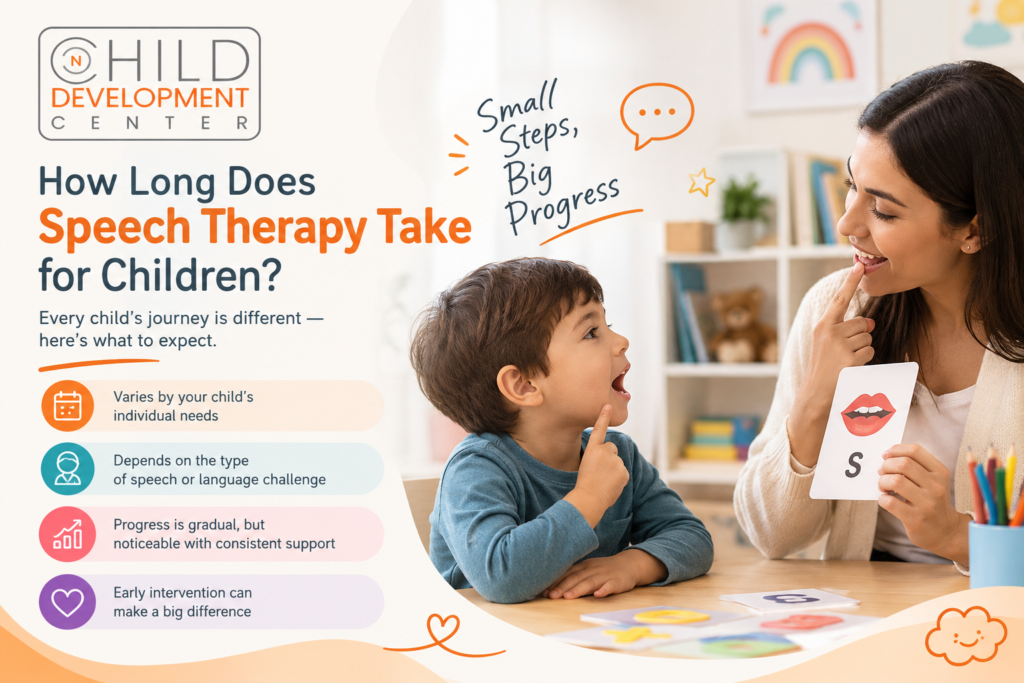
How long before Speech Therapy shows results?
One of the most common questions parents ask is, “How long does Speech Therapy take”
The first signs of improvement are often subtle.
Perhaps your child begins looking at people more often when speaking. Maybe they attempt new words without being prompted. Some children become more willing to participate in conversations, while others start following instructions with greater confidence.
These early changes may appear before speech itself becomes noticeably clearer.
As therapy continues, families often begin noticing:
- Better pronunciation of familiar words
- Longer phrases and sentences
- Better understanding of questions
- Greater willingness to speak with others confidently
- Fewer problems with communication
- Improved participation at school
You may find your child makes rapid strides in one phase and progresses a bit more slowly in another; this is perfectly normal. What matters is that your child keeps going.
How CDC supports children every step of the way?
Finding the right therapy is important. Finding the right team can be even more valuable.
At the Child Development Centre (CDC), communication challenges are never viewed in isolation. Children are assessed from multiple perspectives, so families receive a clear understanding of their child’s strengths as well as the areas needing support.
Our care is guided by the CDC D.A.R.T. Method, a structured framework that brings together medical expertise and individualised therapy.
D.A.R.T. Step | What It Means for Your Child |
Diagnosis | A detailed medical and developmental evaluation to understand the underlying concern. |
Assessment | Comprehensive assessments performed by the appropriate specialists and therapists. |
Recommendation | A personalised care plan explaining therapy goals and practical guidance for families |
Therapy | Evidence-based intervention with regular reviews, feedback, and adjustments as your child progresses. |
This collaborative model allows paediatric neurologists, speech-language therapists, child psychologists, occupational therapists, physiotherapists, and behavioural specialists to work together whenever multidisciplinary care is needed.
Instead of focusing on one symptom, CDC focuses on helping each child build the communication, confidence, and life skills needed for long-term success.
Why families across Dubai trust CDC?
When parents begin looking for speech and language therapy Dubai, they are not simply searching for therapy sessions. They want experienced professionals who will understand their child, explain what is happening in clear language, and guide the family with confidence.
That is the philosophy behind care at the Child Development Centre (CDC).
From the first assessment to each therapy milestone, our team works closely with families to create a supportive environment where children can develop communication skills while feeling understood, encouraged, and celebrated.
Why parents believe in the CDC?
- One of Dubai’s leading multidisciplinary child development centres dedicated exclusively to children.
- More than 25 highly qualified specialists and therapists working together across multiple paediatric specialties.
- Established in 2013, with over 10,000 children and families supported through individualised developmental care.
- Speech-language therapists collaborate with paediatric neurologists, psychologists, occupational therapists, physiotherapists, behavioural therapists, and other specialists whenever multidisciplinary care is needed.
- Individualised therapy plans designed around each child’s strengths, developmental profile, and communication goals rather than a standard treatment program.
- CDC’s exclusive D.A.R.T. Method provides a structured pathway from diagnosis to assessment, recommendations, and therapy.
- Modern diagnostic tools and internationally recognised assessment frameworks help guide clinical decisions.
- Regular progress reviews ensure therapy goals continue to match your child’s development.
- Parents remain active partners throughout therapy, receiving practical guidance they can confidently use at home.
- A welcoming, child-focused environment designed to reduce anxiety and encourage participation during every visit.
Whether your child has a speech delay, language disorder, autism, ADHD, developmental delay, or another neurodevelopmental concern, our team works together to provide coordinated care that supports long-term development.
Recent Post
How long does Speech Therapy take for children?
How long does Speech Therapy take for children? Will my child ever catch up? It is one of the first questions that parents ask when

Signs Your Child May Need a Pediatric Psychologist
Signs Your Child May Need a Pediatric Psychologist Falling out with a friend, pre-exam nerves, or struggling with a new routine — these are moments

Speech Therapy for a Child With Cochlear Implant
Speech Therapy for a Child With Cochlear Implant At Child Development Center (CDC) in Dubai, we work with families navigating one of the most hopeful yet challenging
Contact Us
Help your child communicate with confidence
Children do not measure success by how many sounds they pronounce correctly. They measure it by being able to ask a question, tell a story, make a friend, answer their teacher, or share something exciting that happened during the day.
That is why speech therapy is about far more than improving speech. It gives children the tools to participate more confidently at home, in school, and within the world around them. Many parents also ask, “How long does speech therapy take?” The answer can vary depending on the child’s age, communication needs, underlying difficulties, therapy goals, and individual progress.
At the Child Development Centre (CDC), our experienced multidisciplinary team provides personalised speech and language therapy in Dubai services for infants, toddlers, children, and adolescents. Using our evidence-based D.A.R.T. Method, we identify the root cause of communication challenges and create therapy plans that are practical, measurable, and tailored to your child’s individual needs.
If you have concerns about your child’s speech, language or communication development, make sure to have a full evaluation with CDC. We can all be part of your child’s confidence to communicate, connect, learn and thrive.
FAQ's
Does speech therapy work?
Yes. Speech therapy is an evidence-based intervention that helps children improve speech, language, and communication skills. The best outcomes are usually seen when therapy begins early, and families remain involved throughout the process.
How long does speech therapy take for children?
There is no fixed timeline for speech therapy because every child has different communication needs. The duration may depend on the child’s age, type and severity of the speech or language difficulty, therapy goals, consistency of sessions, and how the child responds to treatment. A speech and language therapist can provide a more personalised estimate after a comprehensive assessment.
When should speech therapy start?
There is no benefit in waiting if you are concerned about your child’s communication. An early assessment allows therapists to identify delays promptly and recommend the most appropriate support.
How long before speech therapy shows results?
Some children begin showing small improvements within a few weeks, while others need several months before changes become more noticeable. Progress depends on the child’s needs, therapy goals, attendance, and home practice.
Can speech therapy help a late talker?
Yes. Many late talkers make excellent progress with early intervention. A professional assessment helps determine whether your child simply needs additional support or has an underlying speech or language disorder.
What affects speech therapy progress?
Several factors influence progress, including the child’s diagnosis, developmental level, consistency of therapy sessions, family participation, opportunities to practice at home, and the presence of any additional developmental or neurological conditions.
Is speech therapy different for every child?
Absolutely. Therapy is individualised because every child has different communication strengths, challenges, interests, and learning styles. Treatment plans are reviewed regularly and adjusted as children achieve new goals.
What age is best for speech therapy?
Earlier intervention often produces the strongest outcomes because young children are developing language rapidly. However, children of all ages can benefit from speech therapy when it addresses their individual needs.
Can speech therapy be completed in a few months?
Children with mild speech sound difficulties may achieve their goals within several months. More complex communication disorders may require ongoing therapy over a longer period.
What happens during speech therapy?
Sessions are planned around your child’s communication goals and may include play-based learning, speech practice, language-building activities, conversation exercises, listening tasks, and parent coaching that supports continued progress at home.
About the Author
Written by Child Development Center Editorial Team | Medically Reviewed by Pediatric Neurodevelopment Specialists
- Established in 2013
- 25+ Highly Qualified Specialists & Child Therapists
- Comprehensive Multi-Specialty Neurodevelopmental Departments
- 10,000+ Children and Families Positively Impacted
- International Clinical Frameworks & Modern Diagnostic Tools
Child Development Center (CDC) is a premier, multi-specialty pediatric facility in Dubai dedicated to providing world-class, tech-integrated, and evidence-based care for children with diverse developmental needs.
Featuring a highly collaborative network of experienced pediatric neurologists, child psychologists, speech-language pathologists, occupational therapists, and behavioral interventionists, the center delivers structured, comprehensive support across dedicated clinical divisions.
By implementing rigorous, evidence-based intervention strategies like our signature D.A.R.T. method, CDC ensures the highest standards of safety, accuracy, and personalized therapeutic outcomes.
Our specialized medical and developmental content is thoroughly drafted and systematically reviewed by qualified healthcare professionals and department specialists to preserve scientific integrity, absolute reliability, and parental transparency.
Armed with advanced diagnostic tools, an inclusive modern environment, and a deeply family-centric philosophy, CDC Dubai remains a premier regional authority in early intervention, pediatric therapies, and empowering children to reach their highest potential.
Medical Disclaimer
The content on this page is provided for informational and educational purposes only and does not constitute formal medical advice, diagnosis, or treatment. Always consult a qualified physician, developmental pediatrician, or certified therapist for personalized clinical guidance regarding your child’s health.
Medically reviewed by the Clinical & Neurodevelopmental Department