
Signs Your Child May Need a Pediatric Psychologist
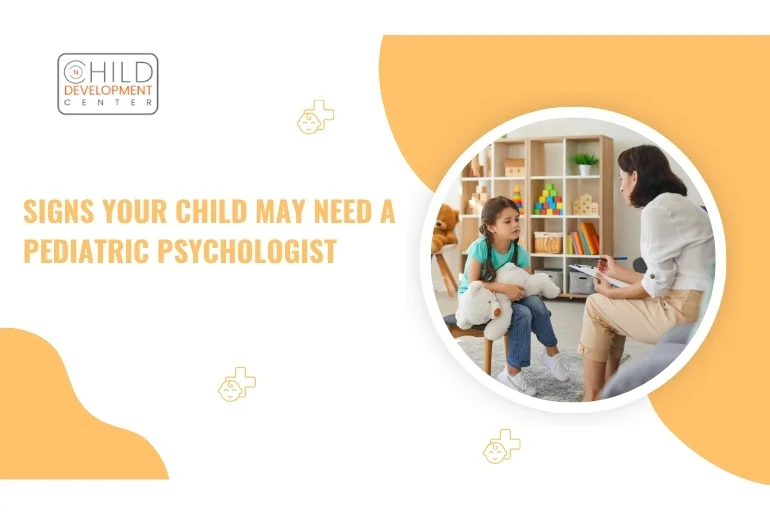
Falling out with a friend, pre-exam nerves, or struggling with a new routine — these are moments most kids experience at some point, and they are generally a completely normal part of growing up.
Recognizing the signs your child may need a pediatric psychologist early can make a significant difference in your child’s emotional, social, and academic development. Seeking help doesn’t mean something is “wrong” with your child; it simply means you’re giving them the support they need to thrive.
At CDC (Child Development Center), children receive compassionate, evidence-based care tailored to their individual developmental and emotional needs. Through expert pediatric psychology, families gain a better understanding of their child’s challenges while learning practical strategies to help them succeed both at home and at school.
Understanding Pediatric Psychology
Children often express emotional struggles differently than adults. Children do not always have the words to say they are anxious or overwhelmed. What shows up instead is often withdrawal, irritability, aggression, or physical complaints like stomachaches and headaches.
Pediatric psychology in Dubai focuses on understanding the connection between a child’s emotions, behavior, development, health, and family environment. The role of a pediatric psychologist is to identify what is really driving a child’s emotional or behavioral concerns, carry out the right assessments for their age, and create a personalized treatment plan that supports the whole family.
If you’ve ever wondered what a pediatric psychologist does, the answer goes beyond therapy sessions. They help children develop healthy coping skills, improve emotional regulation, build social skills, and also give parents practical strategies that encourage positive behavioral changes.
Did you know? According to the Centers for Disease Control and Prevention (CDC), nearly 1 in 7 children aged 3–17 years has a diagnosed mental, emotional, or behavioral condition. |
Top 8 signs your child may need a Pediatric Psychologist
1. Constant worry or anxiety
It’s normal for children to worry occasionally, but persistent fear that interferes with school, friendships, or family life deserves attention. Children with anxiety may avoid certain situations, seek constant reassurance, complain of stomachaches, or refuse to attend school. If these behaviors continue for several weeks, it may be time to consider professional support.
2. Sudden changes in mood
A child who suddenly becomes withdrawn, unusually irritable, or loses interest in activities they once enjoyed may be struggling emotionally. Everyone has off days, but when mood changes become a regular thing or start getting in the way of daily functioning, it is a signal that something more might be going on.
3. Frequent emotional outbursts
If tantrums are happening often, aggressive behavior is becoming a concern, or a child finds it genuinely hard to calm down once upset, emotional regulation may be an area they are struggling with. Rather than simply correcting the behavior, it’s important to understand what’s causing these reactions.
4. Declining school performance
It is easy to assume that slipping grades or concentration difficulties are academic problems, but they can just as often be rooted in emotional or behavioral concerns that have gone unaddressed. Stress, anxiety, ADHD, and other developmental conditions can all affect learning.
5. Difficulty making or keeping friends
Social relationships play an important role in childhood development. If your child consistently avoids social situations, struggles to communicate with peers, or has difficulty maintaining friendships, they may benefit from further evaluation. These can be important signs a child needs a psychologist, especially when accompanied by other emotional concerns.
6. Changes in sleep or eating habits
Children experiencing emotional distress often show changes in their daily routines. Sleep difficulties, recurring nightmares, excessive sleep, a loss of appetite, or emotional eating are all things that can point to underlying psychological stress in a child.
7. Difficulty coping with major life changes
Events such as divorce, moving to a new school, bullying, the loss of a loved one, or a serious illness can affect a child’s emotional well-being. Most children adjust back to their normal routines over time; others may need additional support to process these experiences in a healthy way.
8. Ongoing behavioral concerns
When defiance is constant, impulse control is a daily struggle, and conflicts keep playing out at home and school, it’s important to pay attention, because the right support at the right time can truly make a difference.
Common Signs Your Child May Need a Pediatric Psychologist
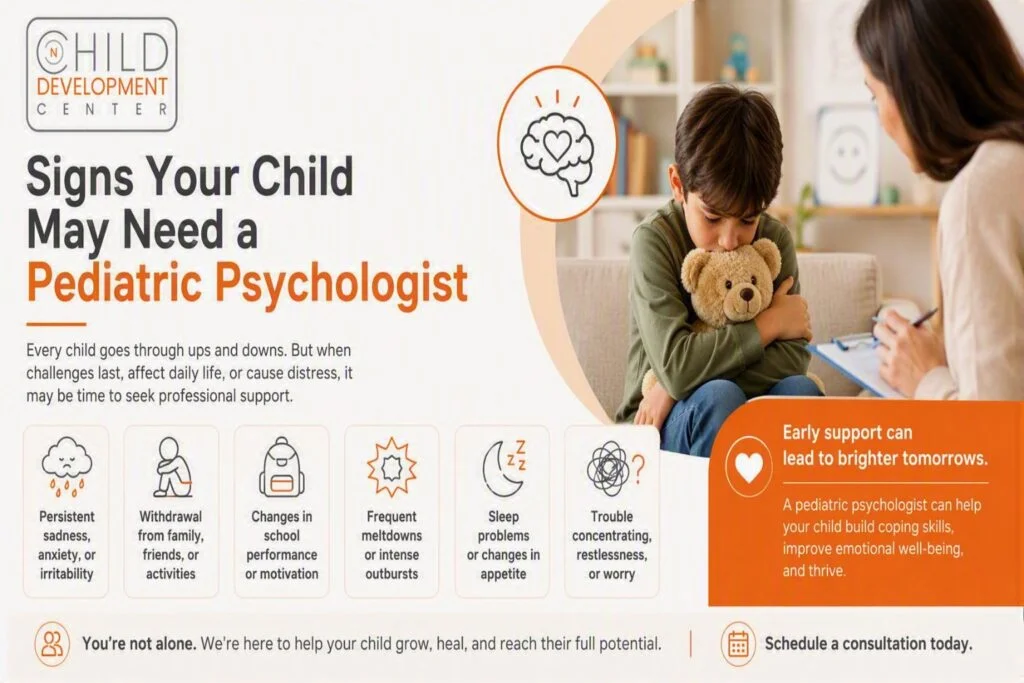
Sign | What Parents May Notice |
Anxiety | Excessive worry, school refusal, physical complaints |
Mood changes | Sadness, irritability, withdrawal |
Emotional outbursts | Frequent tantrums, aggression |
School difficulties | Poor concentration, falling grades |
Social challenges | Difficulty making friends, isolation |
Sleep or appetite changes | Insomnia, nightmares, and eating changes |
Life transitions | Trouble adjusting after major changes |
Behavioral concerns | Defiance, impulsivity, and emotional dysregulation |
Child Psychology Assessment: What parents can expect?
One of the biggest concerns parents have is not knowing what will happen during their child’s first appointment. The good news is that a child psychology assessment is designed to be comfortable, supportive, and tailored to your child’s age.
During an assessment at CDC (Child Development Center), the psychologist may:
- Talk with parents about their concerns and the child’s developmental history.
- Observe how the child communicates, behaves, and interacts.
- Use age-appropriate questionnaires or standardized assessments, when needed.
- Review information from teachers or other healthcare providers (with parental consent).
After the assessment, parents receive a clear explanation of the findings along with personalized recommendations to support their child’s growth and well-being.
What does a pediatric psychologist do?
Many parents think therapy is only for children with severe mental health conditions, but that’s not the case. Pediatric psychology supports children with a wide range of emotional, behavioral, and developmental challenges, including:
- Anxiety disorders
- ADHD (Attention-Deficit/Hyperactivity Disorder)
- Autism Spectrum Disorder (ASD)
- Depression
- Behavioral challenges
- Emotional regulation difficulties
- Stress related to school or family changes
- Trauma and grief
Every child is different, so treatment is always based on their individual needs rather than a one-size-fits-all approach.
Treatment options that help children thrive
No two children experience emotional or behavioral challenges in exactly the same way. That’s why treatment at CDC (Child Development Center) is never based on a fixed plan. After a thorough assessment, the care team develops an approach that reflects your child’s personality, strengths, developmental stage, and the specific challenges they’re facing.
Psychological Counseling
Sometimes, children simply need a safe place where they feel heard without fear of being judged. During counseling, they are encouraged to talk, draw, play, or express themselves in ways that feel natural to them. As trust grows, they gradually learn to understand their emotions, communicate their feelings more openly, and respond to difficult situations with greater confidence.
Cognitive Behavioral Therapy (CBT)
Children don’t always realize how their thoughts influence the way they feel or react. Cognitive Behavioral Therapy (CBT) gently helps them recognize unhelpful thinking patterns and replace them with healthier ones. Over time, they learn practical ways to cope with worries, manage big emotions, solve everyday problems, and feel more confident handling situations that once seemed overwhelming.
Play Therapy
For younger children, play is often their natural language. Through games, storytelling, drawing, and imaginative activities, they can easily express feelings that may be difficult to put into words.
Parent Guidance and Family Support
Parents play a central role in a child’s emotional development, which is why they’re included throughout the therapy process. By working closely with parents, these sessions help create habits along with routine and responses that make children feel safe, understood, and supported.
Social Skills Training
Building friendships doesn’t come naturally for every child. Some children find it difficult to start conversations, understand social cues, or feel comfortable in group settings. Social skills training acts as a platform that helps in exchanging thoughts and increasing communication.
How parents can support their child at home?
Professional support is important, but parents also play a vital role in their child’s emotional development. Small, consistent efforts at home can make a meaningful difference.
You can support your child by:
- Listening without judgment when they share their feelings.
- Maintaining consistent daily routines.
- Encouraging healthy sleep, nutrition, and physical activity.
- Praising effort instead of focusing only on results.
- Staying in regular communication with teachers and caregivers.
- Seeking professional guidance if concerns continue or become more severe.
Remember, asking for help is a sign of proactive parenting, not a sign of failure.
Recent Post
How long does Speech Therapy take for children?
How long does Speech Therapy take for children? Will my child ever catch up? It is one of the first questions that parents ask when

Signs Your Child May Need a Pediatric Psychologist
Signs Your Child May Need a Pediatric Psychologist Falling out with a friend, pre-exam nerves, or struggling with a new routine — these are moments

Speech Therapy for a Child With Cochlear Implant
Speech Therapy for a Child With Cochlear Implant At Child Development Center (CDC) in Dubai, we work with families navigating one of the most hopeful yet challenging
Contact Us
Helping your child grow with confidence
Every child faces challenges while growing up, but ongoing emotional or behavioral concerns shouldn’t be ignored. Recognizing the signs your child may need a pediatric psychologist allows families to seek support before small challenges begin affecting their child’s confidence, relationships, or learning.
At CDC (Child Development Center), compassionate pediatric psychology services are designed to help children better understand their emotions, develop healthy coping skills, and reach their full potential.
If you’ve been wondering when a child should see a pediatric psychologist, trusting your instincts and seeking an evaluation can be the first step toward a healthier, happier future for your child.
FAQ's
How do I know if my child needs a psychologist?
Several weeks of emotional or behavioral challenges affecting school, friendships, or daily life is a sign that an evaluation is worth looking into.
What are the warning signs of emotional problems in children?
When anxiety becomes persistent, tantrums happen often, a child starts pulling away socially, sleep or appetite changes, or school performance begins to slip — these are warning signs that deserve a closer look.
What are the Signs Your Child May Need a Pediatric Psychologist?
Signs may include persistent anxiety, frequent emotional outbursts, significant changes in behaviour, difficulty managing emotions, social challenges, learning concerns, or problems affecting school and family life. A pediatric psychologist can assess these concerns in the context of your child’s age, development, environment, and individual needs.
Can a pediatric psychologist help with ADHD?
Yes. A pediatric psychologist can assess ADHD and help children develop better focus, emotional regulation, and behavior management strategies.
Can anxiety affect children's behavior?
Absolutely. Anxiety may cause children to avoid school, become irritable, have emotional outbursts, or complain of physical symptoms like headaches or stomachaches.
What conditions does a pediatric psychologist treat?
They commonly help children with anxiety, ADHD, autism, depression, behavioral challenges, emotional regulation difficulties, trauma, and social skills concerns.
Should I worry about my child's behavior?
Occasional behavioral changes are normal, but if they become persistent, intense, or interfere with daily life, it’s worth seeking professional advice.
What happens during a child psychology assessment?
The psychologist talks with parents, observes the child, and may use age-appropriate assessments to better understand emotional, behavioral, and developmental concerns.
When should parents seek professional help?
Parents should seek help when concerns persist, worsen over time, or begin affecting their child’s learning, relationships, or overall well-being.
Can a pediatric psychologist help with autism?
Yes. Pediatric psychologists help children with autism strengthen communication, emotional regulation, social interaction, and coping skills while supporting parents throughout the process.

About the Author
Written by Child Development Center Editorial Team | Medically Reviewed by Pediatric Neurodevelopment Specialists
- Established in 2013
- 25+ Highly Qualified Specialists & Child Therapists
- Comprehensive Multi-Specialty Neurodevelopmental Departments
- 10,000+ Children and Families Positively Impacted
- International Clinical Frameworks & Modern Diagnostic Tools
Child Development Center (CDC) is a premier, multi-specialty pediatric facility in Dubai dedicated to providing world-class, tech-integrated, and evidence-based care for children with diverse developmental needs.
Featuring a highly collaborative network of experienced pediatric neurologists, child psychologists, speech-language pathologists, occupational therapists, and behavioral interventionists, the center delivers structured, comprehensive support across dedicated clinical divisions.
By implementing rigorous, evidence-based intervention strategies like our signature D.A.R.T. method, CDC ensures the highest standards of safety, accuracy, and personalized therapeutic outcomes.
Our specialized medical and developmental content is thoroughly drafted and systematically reviewed by qualified healthcare professionals and department specialists to preserve scientific integrity, absolute reliability, and parental transparency.
Armed with advanced diagnostic tools, an inclusive modern environment, and a deeply family-centric philosophy, CDC Dubai remains a premier regional authority in early intervention, pediatric therapies, and empowering children to reach their highest potential.
Medical Disclaimer
The content on this page is provided for informational and educational purposes only and does not constitute formal medical advice, diagnosis, or treatment. Always consult a qualified physician, developmental pediatrician, or certified therapist for personalized clinical guidance regarding your child’s health.
Medically reviewed by the Clinical & Neurodevelopmental Department